Wow, can it be August here already? That means I have about three weeks left of my stay here in Japan. It feels as though I have been here forever, and the time has flown by. And as the time has flown by, I feel increasingly more busy. The schedule that I have been trying to keep is ridiculous, to say the least. Here is the rundown from the 22nd til now. The 22nd I left for a collecting trip in the mountains west of Tokyo at a research forest owned by Tsukuba University. Very pretty, but the fungi just haven't been around, or maybe it is me but we'll get to that. Spent one night in the mountains up there at this place called Kinoko pension. A pension is a western style "penthouse mansion" type of bed and breakfast type of place. Kinoko is the Japanese word for mushroom. How could we not stay there? The owner has actually written a book on the fungi of Japan.
We returned from the mountains on Tuesday. Wednesday was spent dealing with the collections. Thursday, Gi-Ho and I dealt with some minor things around the lab, then ventured into Tokyo for a massive fireworks display. During the summer time there are festivals called Hanabi, where various companies play host to fireworks displays in an attempt to outdo each other for the best. All told the Hanabi we went to was supposed to have 14,000 fireworks, but I only counted 12,756 so I feel a little slighted. It was pretty cool to say the least, and best of all.... free.
After the fireworks we took the shinkansen north to the city of Sendai, which is on the Pacific coast. Got in around 12:00. The next morning it was off for some sightseeing at a little town called Matsushima (pine island). This city overlooks a bay where there are about 250 little islands all covered in pine trees. Very beautiful. The poet Basho visited here and supposedly wrote a very famous poem about the place, but I don't know what it is.
After that we continued up the coast by shinkansen to the northern most prefecture, Aomori. This is where we met Tsuyoshi (host researcher) the following day. From there we went into the woods. This is one of the most beautiful parts of the country that I have seen yet. The beech forests here are stunning, and not unlike the southern appalachians, which might be why I am so taken with them. We spent that night at an onsen resort. This is where we met the amateur cordyceps group I mentioned in an earlier post (no fish sake this time). We had an amazing feast that night, they tried yet again to drown us in sake, and then the next morning we went collecting. Again, they found more amazing fungi, which I probably completely overlooked. Now we are at Sunday. Monday, we took the shinkansen back to Tsukuba, and stayed in the lab til about 8:00pm or so dealing with all of the stuff that we found in Aormori. Tuesday we took a trip to visit some collaborators in Chiba prefecture, which is on the east side of Tokyo bay. Today is Wednesday and I don't have anywhere to go today or tomorrow, but Friday I leave for another collecting trip with the Cordyceps Group. I come back Sunday, and am going to leave on Monday for Kyoto, to meet with the southern version of the Amateur Cordyceps Group, and also do more collecting. I don't know how long I am going to stay down there, but since lodging will be free at someones guest house, I might take advantage of the opportunity to see some more of the city, which is supposed to be one of the best in all of Japan. This will put me back home (if it can be called that) the following Monday.
So, that would end up being three weeks of strait travel. Is it too much? Well, maybe a little. Do I care? Not a bit.
Now you see why there are no pictures up on any of the last couple of posts. I will try to change that in the near future. But you might just have to wait a little bit longer.
Tuesday, July 31, 2007

Monday, July 16, 2007
Typhoons, Earthquakes and Hotsprings...
Well, it has been entirely too long since I put anything on here.
First let me say that I survived all of the natural phenomena that Japan was subjected to over the weekend. In fact, I didn't even feel the quake. I actually didn't experience the typhoon either. And that is where our story begins.....
Monday (it is Tuesday morning here now as I write this) was a national holiday here in Japan, which means three day weekend in my book. I had some plans to go to a huge temple complex in the mountains outside of Tokyo, but those plans fell through for whatever reasons. On Friday, I was considering my options. It was supposed to be rainy (=typhoon). There were some offers to go to Tokyo and do some stuff like museum hopping and the like, but I have spent a couple of weekends in Tokyo now and was feeling like something a little more adventurous. During lunch I was mulling all this over, when I chanced to look at the TV set in the cafeteria and noticed that in spite of the impending typhoon, there were some spots on the map that showed at least a little sunshine. That was all it took. Upon returning to my office I started researching destinations. For a brief moment or two I was considering going to Niigata, the site of the earthquake, but instead decided that my destination should be the little town of Tazawako, nestled in the mountains of Akita prefecture.
And so I left, right then. Backpack full of nothing but the bare minimum, which for me means that I left my toothbrush back at the house. I swear, I could document my travels by all the various toothbrushes I have bought after setting out. "Here is my toothbrush from Hawaii. I bought this one after I got to Chicago. And this one here, this is the first one that I bought in Japan. I like it better than the second and third."
I arrived in Tazawako around 8:00 after a three hour Shinkansen ride. Took a taxi to the youth hostel and had an amazing home cooked meal for dinner. The following morning at breakfast I dinned with a couple from Yokohama that spoke English. They asked me to accompany them as they biked around the lake. An invitation I was glad to accept. Lake Tazawako is the deepest in Japan, -423m. This puts it right up there next to Crater Lake, and similar to Crater Lake, the water is a radiant blue color.
After that little adventure, it was back on the Shinkansen, destination: Kakunodate. Because the Shinkansen is just plain fast this little jaunt, that is a hour long bus ride, took all of about 20 minutes. Kakunodate is a town that formerly had a very large samurai population, prior to the start of the Meiji period (1868ish). Because of this, the town is full of some very old, stately homes, with amazing traditional style gardens surrounding them. These aren't like the places that you see in the southern US, the plantation homes with the ostentatious gardens, bursting with color. This is Japan after all. These homes exuded a quiet opulence, very refined, and seemingly self assured. In short, what I would expect a samurai to be like. In fact, the mood of the city here is described as being similar to Kyoto, which is a high compliment indeed (Kyoto is next on the list, if I can find the time.... but I digress). There is also the usual smattering of touristy shops and over priced food, but amongst these there is one of the most unique folk crafts I have seen. Household wares that have been covered in cherry bark. It really creates a stunning effect.
After I had finished having my way with the samurai, it was on to Akita city, the prefectural capital. My hopes weren't high, since the guide book describes it as an industrial city, but it was also noted as having a busy nightlife district, and is fairly close to the ocean. It was also only 30min away on the Shinkansen, so why not? Well, it really just isn't that great, that's why. The night life scene is definitely there, but not quite what I wanted. By that I mean I wasn't interested in strip joints, maid cafes (I won't bother to describe this unique phenomena here, google it or something) or gimicky looking bars full of businessmen. I ended up at a place called "Cell Block" which I though might be a hangout for biologists, but it turns out the wasn't the right kind of "cell". They were playing hip hop music and I thought maybe there would be dancing or something, a chance to mingle with some people a little closer to my age. Wrong. It was me, the bartender and two girls over by the window talking to themselves. Fortunately the bartender was super cool, although he spoke less english than I speak Japanese, which means he didn't speak any. It ended up with just me and him, throwing darts (and loosing badly, but he had the home court advantage) and drinking for free. Maybe Akita isn't so bad after all.
The next morning, after sleeping in a little bit (well, I was partying with a bartender after all) I set out in search of the Sea of Japan (or East Sea if you ask a Korean. Kind of a touchy subject). Wrong again. Don't misunderstand, the sea is still there, there just isn't an easy way to get there and all of the beaches are still closed. That was it. Time to leave Akita and find some hotsprings, or onsen.
And so I did. Another shinkansen ride back to Tazawako, a bus ride up into the mountains and then nothing but blistering hot water. This was in the Nyuto area, which has a ton of onsen all over the place. These resorts are very nice, but the only problem is they are kinda expensive, at least if you want to spend the night. I was starting to feel a little over extended in the pocketbook, so I inquired at the hostel back down the mountain again. Full. Thought about going to the campsite a little ways down the mountain, ahhhh but no tent, and for the amount it would cost to rent a tent there I could just about stay at the onsen. Hmmmmmm.....
Well I had a sleeping bag. And is that an old shed over there? Problem solved. And so I spent the night listening to the wind spun off from the typhoon whipping through the trees, lying in an old tool shed up in the mountains of Japan. The next morning I awoke with the sun to hear birds singing (and some little critter rummaging around), the wind had died down, and I took a little stroll through the forests before catching the first bus back down the mountain. The views from the bus of Lake Tazawako were stunning, since the clouds had broken up and the sun was shinning through. And while I was chatting with some Finnish backpackers in front of the train station, sun bearing down, hearty breeze sweeping away the last of the clouds, there was a major earthquake about 200km away or so. I had no idea about the details of which until I saw the reports this morning. It feels like a small world sometimes, but don't be fooled.
First let me say that I survived all of the natural phenomena that Japan was subjected to over the weekend. In fact, I didn't even feel the quake. I actually didn't experience the typhoon either. And that is where our story begins.....
Monday (it is Tuesday morning here now as I write this) was a national holiday here in Japan, which means three day weekend in my book. I had some plans to go to a huge temple complex in the mountains outside of Tokyo, but those plans fell through for whatever reasons. On Friday, I was considering my options. It was supposed to be rainy (=typhoon). There were some offers to go to Tokyo and do some stuff like museum hopping and the like, but I have spent a couple of weekends in Tokyo now and was feeling like something a little more adventurous. During lunch I was mulling all this over, when I chanced to look at the TV set in the cafeteria and noticed that in spite of the impending typhoon, there were some spots on the map that showed at least a little sunshine. That was all it took. Upon returning to my office I started researching destinations. For a brief moment or two I was considering going to Niigata, the site of the earthquake, but instead decided that my destination should be the little town of Tazawako, nestled in the mountains of Akita prefecture.
And so I left, right then. Backpack full of nothing but the bare minimum, which for me means that I left my toothbrush back at the house. I swear, I could document my travels by all the various toothbrushes I have bought after setting out. "Here is my toothbrush from Hawaii. I bought this one after I got to Chicago. And this one here, this is the first one that I bought in Japan. I like it better than the second and third."
I arrived in Tazawako around 8:00 after a three hour Shinkansen ride. Took a taxi to the youth hostel and had an amazing home cooked meal for dinner. The following morning at breakfast I dinned with a couple from Yokohama that spoke English. They asked me to accompany them as they biked around the lake. An invitation I was glad to accept. Lake Tazawako is the deepest in Japan, -423m. This puts it right up there next to Crater Lake, and similar to Crater Lake, the water is a radiant blue color.
After that little adventure, it was back on the Shinkansen, destination: Kakunodate. Because the Shinkansen is just plain fast this little jaunt, that is a hour long bus ride, took all of about 20 minutes. Kakunodate is a town that formerly had a very large samurai population, prior to the start of the Meiji period (1868ish). Because of this, the town is full of some very old, stately homes, with amazing traditional style gardens surrounding them. These aren't like the places that you see in the southern US, the plantation homes with the ostentatious gardens, bursting with color. This is Japan after all. These homes exuded a quiet opulence, very refined, and seemingly self assured. In short, what I would expect a samurai to be like. In fact, the mood of the city here is described as being similar to Kyoto, which is a high compliment indeed (Kyoto is next on the list, if I can find the time.... but I digress). There is also the usual smattering of touristy shops and over priced food, but amongst these there is one of the most unique folk crafts I have seen. Household wares that have been covered in cherry bark. It really creates a stunning effect.
After I had finished having my way with the samurai, it was on to Akita city, the prefectural capital. My hopes weren't high, since the guide book describes it as an industrial city, but it was also noted as having a busy nightlife district, and is fairly close to the ocean. It was also only 30min away on the Shinkansen, so why not? Well, it really just isn't that great, that's why. The night life scene is definitely there, but not quite what I wanted. By that I mean I wasn't interested in strip joints, maid cafes (I won't bother to describe this unique phenomena here, google it or something) or gimicky looking bars full of businessmen. I ended up at a place called "Cell Block" which I though might be a hangout for biologists, but it turns out the wasn't the right kind of "cell". They were playing hip hop music and I thought maybe there would be dancing or something, a chance to mingle with some people a little closer to my age. Wrong. It was me, the bartender and two girls over by the window talking to themselves. Fortunately the bartender was super cool, although he spoke less english than I speak Japanese, which means he didn't speak any. It ended up with just me and him, throwing darts (and loosing badly, but he had the home court advantage) and drinking for free. Maybe Akita isn't so bad after all.
The next morning, after sleeping in a little bit (well, I was partying with a bartender after all) I set out in search of the Sea of Japan (or East Sea if you ask a Korean. Kind of a touchy subject). Wrong again. Don't misunderstand, the sea is still there, there just isn't an easy way to get there and all of the beaches are still closed. That was it. Time to leave Akita and find some hotsprings, or onsen.
And so I did. Another shinkansen ride back to Tazawako, a bus ride up into the mountains and then nothing but blistering hot water. This was in the Nyuto area, which has a ton of onsen all over the place. These resorts are very nice, but the only problem is they are kinda expensive, at least if you want to spend the night. I was starting to feel a little over extended in the pocketbook, so I inquired at the hostel back down the mountain again. Full. Thought about going to the campsite a little ways down the mountain, ahhhh but no tent, and for the amount it would cost to rent a tent there I could just about stay at the onsen. Hmmmmmm.....
Well I had a sleeping bag. And is that an old shed over there? Problem solved. And so I spent the night listening to the wind spun off from the typhoon whipping through the trees, lying in an old tool shed up in the mountains of Japan. The next morning I awoke with the sun to hear birds singing (and some little critter rummaging around), the wind had died down, and I took a little stroll through the forests before catching the first bus back down the mountain. The views from the bus of Lake Tazawako were stunning, since the clouds had broken up and the sun was shinning through. And while I was chatting with some Finnish backpackers in front of the train station, sun bearing down, hearty breeze sweeping away the last of the clouds, there was a major earthquake about 200km away or so. I had no idea about the details of which until I saw the reports this morning. It feels like a small world sometimes, but don't be fooled.
Thursday, July 5, 2007
Voyage to the mountains
Last weekend I had my first trip to one of the rural areas of Japan. My host and Itook the Shinkansen (bullet train) north to Yamagata Pref. The Shinkansen, one of the fastest train systems in the world, is a pleasure to ride. It goes about 300 km per hour, or nearly 200mph, so you get where you are going very fast. Not only that, they serve beer. Ahhhh Japan.....
Anyway, we spent the night in the city Yamagata, and then in the morning, after a breakfast of onigiri and miso soup, met members of the Tochukaso Circle, or Amateur Cordyceps Group. Japan is a very fungus loving culture, and this group is an extreme example of that. The members of the group that we met we locals of the area, which is crucial from my perspective, since my nascent Japanese language skills only allow me to do things like order food and exchange pleasantries. Couple this with the fact that the people living in the area speak a unique dialect and I would be hard pressed to find my way into the remote parts of the mountains alone. The degree of separation from Japanese spoken there, versus that spoken in the Tokyo area is beyond that existing between, say, Maine and Florida. In fact Hosoya-san, my host, could only make out about 80% of what some of the people were saying.
The ride into the mountains took us through some agricultural fields, the majority of which consist of rice paddies, although there is also a lot of forage crop, grown to feed the cattle for which the area is famous. They also produce a lot of cherries. I bought some of them and they were good, but fresh fruit is a commodity in short supply, due the low amount of land available for agriculture. I paid 1000 yen, which translates to about 10 bucks. The cherries were good, especially because it had in fact been awhile since I had enjoyed any fresh fruit, but they're a far cry from what they grow in Oregon (sigh...).
I've been out collecting my fungi in the states before. Over a two week period, visiting five states, my labmate and I were able to collect about 200 individual specimens, representing 17 or so species. I felt ok about those kind of numbers, since the conditions had not been totally conducive for the growth of the fungi. To say that things are different here, would be an understatement of profound proportions. In the span of about four hours, 10 people were able to locate 244 individual specimens, representing 24 species. When I heard those numbers, my jaw dropped and I wondered if perhaps I had chosen the wrong profession. Maybe I should go into accounting or something. However, I shouldn't be so hard on myself, since the leader of the group has been scouring the forests in search of these things for over 40 years.
That night we were treated to a fantastic spread of food. Many new things to try, including some wild foods, like fiddle head ferns and mizo, which is a plant that tastes a little like celery (incidentally, you should ask a Japanese person to say "celery" some time. The "l" and "r" sounds are combined in this language so it comes out sounding like "cerlerly". Pretty funny really. Anyway...)
In addition to the wonderful food, I also had the most interesting culinary item since arriving. Sake is a drink that is sometimes served warm, this is no surprise to most of you. However, my new friends in Yamagata have developed a new twist on this. While heating the sake, they put fish in the kettle. The result is a drink where the evaporating alcohol hits your nose first, with a pungent fishy odor hot on its heals. It seems to me a bit like drinking the water that you drain off of canned tuna, or maybe sardines. I wouldn't say you should refuse it if ever offered such a concoction, it wasn't bad. But maybe this is one trend from Japan that should stay in Japan.
The following morning, was another introduction to new foods. Tripe stew. Tripe is a very tender meat, but not exactly what you want to have first thing in the morning, especially after a night spent slurping fishy sake. However, everything was set right upon leaving, since we stopped at one of the local onsen. Since Japan is on a pretty active subducting plate boundry, there are a multitude of hotsprings sprinkled throughout the mountains. Onsen are hotsprings that have been built up a little bit to form tubs and such. The perfect thing for a body tired of stooping through the brush and negotiating poison ivy (will I ever be free from this scourge of a plant?) and steep slopes looking for tiny fungi.
Anyway, we spent the night in the city Yamagata, and then in the morning, after a breakfast of onigiri and miso soup, met members of the Tochukaso Circle, or Amateur Cordyceps Group. Japan is a very fungus loving culture, and this group is an extreme example of that. The members of the group that we met we locals of the area, which is crucial from my perspective, since my nascent Japanese language skills only allow me to do things like order food and exchange pleasantries. Couple this with the fact that the people living in the area speak a unique dialect and I would be hard pressed to find my way into the remote parts of the mountains alone. The degree of separation from Japanese spoken there, versus that spoken in the Tokyo area is beyond that existing between, say, Maine and Florida. In fact Hosoya-san, my host, could only make out about 80% of what some of the people were saying.
The ride into the mountains took us through some agricultural fields, the majority of which consist of rice paddies, although there is also a lot of forage crop, grown to feed the cattle for which the area is famous. They also produce a lot of cherries. I bought some of them and they were good, but fresh fruit is a commodity in short supply, due the low amount of land available for agriculture. I paid 1000 yen, which translates to about 10 bucks. The cherries were good, especially because it had in fact been awhile since I had enjoyed any fresh fruit, but they're a far cry from what they grow in Oregon (sigh...).
I've been out collecting my fungi in the states before. Over a two week period, visiting five states, my labmate and I were able to collect about 200 individual specimens, representing 17 or so species. I felt ok about those kind of numbers, since the conditions had not been totally conducive for the growth of the fungi. To say that things are different here, would be an understatement of profound proportions. In the span of about four hours, 10 people were able to locate 244 individual specimens, representing 24 species. When I heard those numbers, my jaw dropped and I wondered if perhaps I had chosen the wrong profession. Maybe I should go into accounting or something. However, I shouldn't be so hard on myself, since the leader of the group has been scouring the forests in search of these things for over 40 years.
That night we were treated to a fantastic spread of food. Many new things to try, including some wild foods, like fiddle head ferns and mizo, which is a plant that tastes a little like celery (incidentally, you should ask a Japanese person to say "celery" some time. The "l" and "r" sounds are combined in this language so it comes out sounding like "cerlerly". Pretty funny really. Anyway...)
In addition to the wonderful food, I also had the most interesting culinary item since arriving. Sake is a drink that is sometimes served warm, this is no surprise to most of you. However, my new friends in Yamagata have developed a new twist on this. While heating the sake, they put fish in the kettle. The result is a drink where the evaporating alcohol hits your nose first, with a pungent fishy odor hot on its heals. It seems to me a bit like drinking the water that you drain off of canned tuna, or maybe sardines. I wouldn't say you should refuse it if ever offered such a concoction, it wasn't bad. But maybe this is one trend from Japan that should stay in Japan.
The following morning, was another introduction to new foods. Tripe stew. Tripe is a very tender meat, but not exactly what you want to have first thing in the morning, especially after a night spent slurping fishy sake. However, everything was set right upon leaving, since we stopped at one of the local onsen. Since Japan is on a pretty active subducting plate boundry, there are a multitude of hotsprings sprinkled throughout the mountains. Onsen are hotsprings that have been built up a little bit to form tubs and such. The perfect thing for a body tired of stooping through the brush and negotiating poison ivy (will I ever be free from this scourge of a plant?) and steep slopes looking for tiny fungi.
Thursday, June 28, 2007
Tokyo
Tokyo means "Eastern Capital". It went from being a tiny little farming town called Edo during the early 1600's in the Kanto plain to one of the most populous cities in the world, with over a million people living there at the time Commodore Perry "invited" (read: forced) Japan to open the port of Tokyo to trade with the rest of world. Today the city has an unequaled modern look, probably as a result of enduring two massively destructive forces: The Great Kanto Earthquake in 1923, and intensive firebombings by US and allied forces during the second World War. The complete recovery of the city from both of these events can be taken as a metaphor for Japan as a whole. It is the showcase for a culture that has developed a seemingly unequaled resourcefulness from centuries of making do with the limited resources that accompany island life.
There is no parallel in my mind to this place. Although the air of Washington DC is regal, stately, and most definitely moving on a visceral level, it inspires emotions because it is the "seat of power for the free world", and you would have to be mad to not at least respect that (regardless of your political leanings).
San Fransisco has a vitality surging through it's streets. A heady mix of creativity and philosophical classiness. The memory of so many events that have impacted our countries fate is still fresh. But there is also an air of vanity present, as if the casual observer to the city is not good enough, as if you have to absolutely adore the city to understand it.
The vibe in Chicago is one of meerly maintaining. Oh don't get me wrong, there I like it well enough. But it's time has come and gone, as the wave of offshoring industry and manufacturing nears completion.
The only city I have personally visited that can even hold a candle to Tokyo is New York City (Didn't see that coming, did you?). In spite of being, big, and dirty, and the site of so much corruption, NYC manages to keep it's head above water and moving ahead. DC might be the seat of political power, but NYC is one of the rare spots in America where cultural power is manifest (I know that some would argue the same for good ole New Orleans, but I haven't been there...).
And although I will represent Brooklyn all day long ('sup Jess, Julia and Micah?), it just doesn't compare to Tokyo. Hands down, it is the most amazing city I have ever spent time in. Maybe it's because I am a country boy, having spent most of the last decade in towns under 50,000 in size. Maybe it's just because I haven't been to Paris, Rome or London. Or perhaps it's because walking in Tokyo is like a glimpse of what the future might be like. It is absolutely amazing how clean it is, with 35 million people living in the greater Tokyo area. The train system is actually nice to ride on, and surprisingly easy, even for someone who doesn't read a lick of Kanji.
My only complaint is that the trains stop running at 12:30, just when it feels like the city is picking up. I suppose I should have some great stories to tell about what I did there to make me feel this way, but the truth is that just being there is an experience in itself. I went out, had some drinks and dinner, saw some sights the next day, and then went home. But I have never felt such an intense desire to return to a place again and again and again. You can just there will always be something new waiting for you, no matter how many times you go. Alright enough of me prattling on like this, you want pictures right? This is about all that I have for now, more on the way...

Is it information overload if you don't know what it says? This is in the Shibuya section of town. Very hip, very trendy. I stood out like a sore thumb, and not just because I am about a foot or so taller than the rest of the population.

This is Jerome, friend of a friend, who has been in Japan for 7 years and has the digs on where to go for a good dinner and drinks at 11:00 at night.

The face is the only thing remaining from a statue of Daibutsu that was damaged in the 1923 quake.

Rockabilly isn't dead here. These people were getting down in a park in Ueno just for the heck of it. Not taking money or anything. I haven't seen coifs like these in a long time.

35 million people means 35 million umbrellas when it rains. And they all want a piece of my eyes, or in some cases, my chin.

I believe I've mentioned how nice the people are, right? It's just amazing how inviting some of them can be.

And it's good to know that drag queens are pretty much the same all over the world, flamboyant as hell.
There is no parallel in my mind to this place. Although the air of Washington DC is regal, stately, and most definitely moving on a visceral level, it inspires emotions because it is the "seat of power for the free world", and you would have to be mad to not at least respect that (regardless of your political leanings).
San Fransisco has a vitality surging through it's streets. A heady mix of creativity and philosophical classiness. The memory of so many events that have impacted our countries fate is still fresh. But there is also an air of vanity present, as if the casual observer to the city is not good enough, as if you have to absolutely adore the city to understand it.
The vibe in Chicago is one of meerly maintaining. Oh don't get me wrong, there I like it well enough. But it's time has come and gone, as the wave of offshoring industry and manufacturing nears completion.
The only city I have personally visited that can even hold a candle to Tokyo is New York City (Didn't see that coming, did you?). In spite of being, big, and dirty, and the site of so much corruption, NYC manages to keep it's head above water and moving ahead. DC might be the seat of political power, but NYC is one of the rare spots in America where cultural power is manifest (I know that some would argue the same for good ole New Orleans, but I haven't been there...).
And although I will represent Brooklyn all day long ('sup Jess, Julia and Micah?), it just doesn't compare to Tokyo. Hands down, it is the most amazing city I have ever spent time in. Maybe it's because I am a country boy, having spent most of the last decade in towns under 50,000 in size. Maybe it's just because I haven't been to Paris, Rome or London. Or perhaps it's because walking in Tokyo is like a glimpse of what the future might be like. It is absolutely amazing how clean it is, with 35 million people living in the greater Tokyo area. The train system is actually nice to ride on, and surprisingly easy, even for someone who doesn't read a lick of Kanji.
My only complaint is that the trains stop running at 12:30, just when it feels like the city is picking up. I suppose I should have some great stories to tell about what I did there to make me feel this way, but the truth is that just being there is an experience in itself. I went out, had some drinks and dinner, saw some sights the next day, and then went home. But I have never felt such an intense desire to return to a place again and again and again. You can just there will always be something new waiting for you, no matter how many times you go. Alright enough of me prattling on like this, you want pictures right? This is about all that I have for now, more on the way...
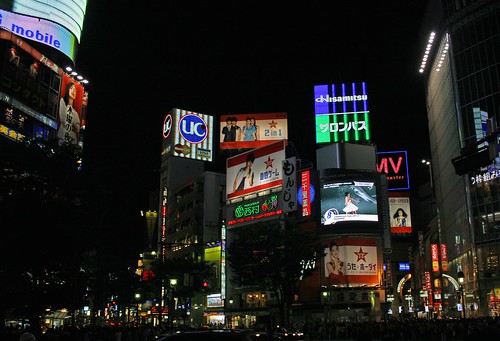
Is it information overload if you don't know what it says? This is in the Shibuya section of town. Very hip, very trendy. I stood out like a sore thumb, and not just because I am about a foot or so taller than the rest of the population.
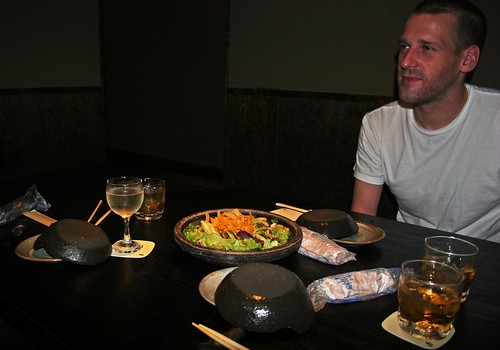
This is Jerome, friend of a friend, who has been in Japan for 7 years and has the digs on where to go for a good dinner and drinks at 11:00 at night.
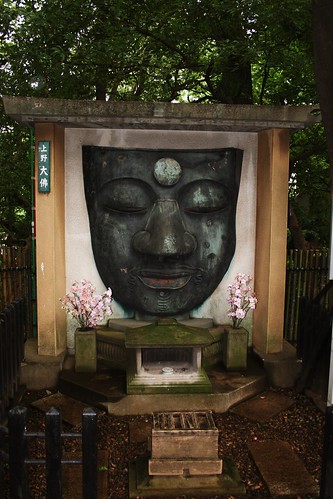
The face is the only thing remaining from a statue of Daibutsu that was damaged in the 1923 quake.
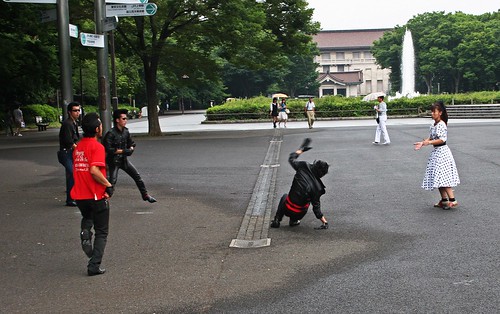
Rockabilly isn't dead here. These people were getting down in a park in Ueno just for the heck of it. Not taking money or anything. I haven't seen coifs like these in a long time.

35 million people means 35 million umbrellas when it rains. And they all want a piece of my eyes, or in some cases, my chin.

I believe I've mentioned how nice the people are, right? It's just amazing how inviting some of them can be.

And it's good to know that drag queens are pretty much the same all over the world, flamboyant as hell.
Tuesday, June 26, 2007
Collecting trip
I had my first collecting trip of the summer over the weekend. Unfortunately there was very little in the way of entomopathogens, but the forest and weather were nice just the same. It was also fun to be out with a group of people as dorky as I am that know all the plants, birds, fungi etc. Looking for Cordyceps can be a challenge, because they are often very small and blend in with the background. This is only compounded by being in a new setting, such as I find myself in here. There are all kinds of things lying around on the forest floor that I am not used to seeing, so it takes an effort to not notice them so much and try to see the fungi I am looking for. Like I said, not too much of what I was looking for, but cool stuff never the less.
Here we are starting out hike.

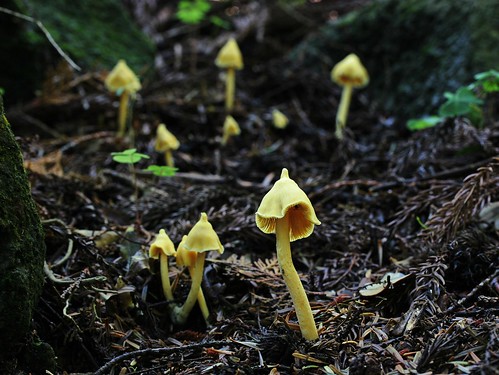
Some of the fungi we did see.

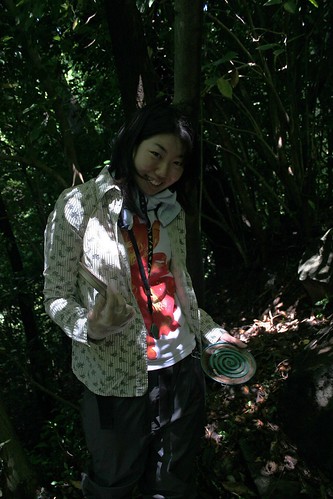
Here is Sassegawa-san. She works in my lab and has a unique way of keeping mosquitoes at bay. What she has in her hand is a mosquito coil burning in an incense burner attached to her belt. I had never seen this before, but I guess that it works.

The place that we were collecting is on the mountain just outside of town. I use the word "mountain" loosely here, since it is only about 867 m (right around 2500 feet for those of you that don't know metric). Still it's very pretty forest and you can take a bus there and go for a hike.
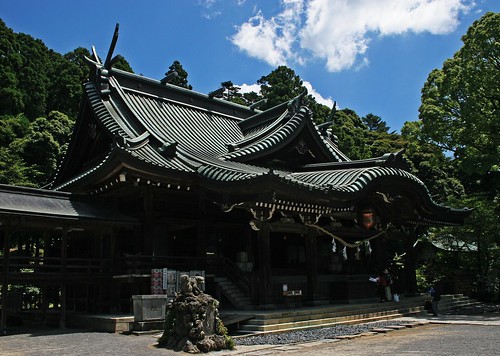
The mountain also sports a Shinto shrine. Shinto is the indigenous religion to Japan, and the adherents revere prominent aspects of nature, such as Tsukuba-san, as sacred. The temple here is a representation of that reverence. That is also why there is a gate at the beginning of the trail in that first picture.

Here I am with one of the workers at the temple, a friend of Sassegawa-san, which is why we were able to get our pictures taken. The woman on the left is a researcher from Thailand.

Coming soon: Tales of Tokyo
Here we are starting out hike.

Some of the fungi we did see.
Here is Sassegawa-san. She works in my lab and has a unique way of keeping mosquitoes at bay. What she has in her hand is a mosquito coil burning in an incense burner attached to her belt. I had never seen this before, but I guess that it works.
The place that we were collecting is on the mountain just outside of town. I use the word "mountain" loosely here, since it is only about 867 m (right around 2500 feet for those of you that don't know metric). Still it's very pretty forest and you can take a bus there and go for a hike.
The mountain also sports a Shinto shrine. Shinto is the indigenous religion to Japan, and the adherents revere prominent aspects of nature, such as Tsukuba-san, as sacred. The temple here is a representation of that reverence. That is also why there is a gate at the beginning of the trail in that first picture.
Here I am with one of the workers at the temple, a friend of Sassegawa-san, which is why we were able to get our pictures taken. The woman on the left is a researcher from Thailand.

Coming soon: Tales of Tokyo
Sunday, June 24, 2007
Life in Tsukuba
Gentle reader,
I am now safely established in my host institution. That would be the research branch of the National Museum of Science and Nature (formerly The National Science Museum or TNS) located in Tsukuba, science city. My host researcher is exceedingly nice, as are most Japanese. He met me at the central train station in Tokyo so that I wouldn't have to try navigating the cavernous expanses of that building. And it is a seriously huge building. It apparently services about 740,000 people a day. Think about that, almost a million people passing through its doors every day. I have more stories about trains in Tokyo, but that will have to wait for another post....
So my room is nice, but pretty small. It has all of the accoutrements one could require: sink, hotplate, microwave, washer/dryer, TV and I even fit on the bed. It doesn't get much sun, and the alarm clock doesn't work, so it is entirely too easy to oversleep. But there is a nice wooded area that my little porch opens out onto, so that is nice.
Here in Tsukuba the dominant industry is, well... science, as the name would imply. There are two major universities, and more research institutions than I could name, some of which other EAPSI fellows are working at, so we have a support group here. I wouldn't say that a support group is needed, but there are definitely some differences between life here and life in the states. There is of course, the language. Although I had an intensive three day training during the orientation, that basically only equips you with enough Japanese to be dangerous. I can ask for directions, but not interpret the results. There is also the issue of footware. They really do take the removal of shoes upon entering a building seriously here. Here is what I do when I leave my room in the morning to go to work: put on the house slippers (which couldn't fit if they had to, way too small!). I walk to the lobby of the building I stay in, put on street shoes, walk across the parking lot to where the lab is, enter the building, put on another pair of slippers (I went out and bought a pair that fits) and then go to the lab. If I need to go to the bathroom, there is a separate pair of slippers for that. If I need to use the clean room (where we deal with materials that need to be kept sterile) there is a separate pair of slippers for that. I probably change footware 15 times a day. No fooling. If I forget something in the room, I do it all again. There is the temptation to just fore go all of this when no one is looking, but when in Rome....
Tsukuba itself is actually kind of dull. So much so that they built an express train line just to haul get people out of here fast and into Tokyo where there is more to do than one human life could ever hope to contain. But the people I am around daily are great and it makes for a nice work environment. Coupled with the lack of other distractions, I should be able to get a lot done. Especially when you consider that the total holdings for Cordyceps and its close relatives number well above seven hundred. I will never get through all of them, but I have made a hit list of the important ones for me.
And that is pretty much it for Tsukuba. There is a mountain (well, a really big hill) nearby that is great for hiking. We went collecting there over the weekend, but that will be another post as well. I know, the suspense is killing you!!!!
I am now safely established in my host institution. That would be the research branch of the National Museum of Science and Nature (formerly The National Science Museum or TNS) located in Tsukuba, science city. My host researcher is exceedingly nice, as are most Japanese. He met me at the central train station in Tokyo so that I wouldn't have to try navigating the cavernous expanses of that building. And it is a seriously huge building. It apparently services about 740,000 people a day. Think about that, almost a million people passing through its doors every day. I have more stories about trains in Tokyo, but that will have to wait for another post....
So my room is nice, but pretty small. It has all of the accoutrements one could require: sink, hotplate, microwave, washer/dryer, TV and I even fit on the bed. It doesn't get much sun, and the alarm clock doesn't work, so it is entirely too easy to oversleep. But there is a nice wooded area that my little porch opens out onto, so that is nice.
Here in Tsukuba the dominant industry is, well... science, as the name would imply. There are two major universities, and more research institutions than I could name, some of which other EAPSI fellows are working at, so we have a support group here. I wouldn't say that a support group is needed, but there are definitely some differences between life here and life in the states. There is of course, the language. Although I had an intensive three day training during the orientation, that basically only equips you with enough Japanese to be dangerous. I can ask for directions, but not interpret the results. There is also the issue of footware. They really do take the removal of shoes upon entering a building seriously here. Here is what I do when I leave my room in the morning to go to work: put on the house slippers (which couldn't fit if they had to, way too small!). I walk to the lobby of the building I stay in, put on street shoes, walk across the parking lot to where the lab is, enter the building, put on another pair of slippers (I went out and bought a pair that fits) and then go to the lab. If I need to go to the bathroom, there is a separate pair of slippers for that. If I need to use the clean room (where we deal with materials that need to be kept sterile) there is a separate pair of slippers for that. I probably change footware 15 times a day. No fooling. If I forget something in the room, I do it all again. There is the temptation to just fore go all of this when no one is looking, but when in Rome....
Tsukuba itself is actually kind of dull. So much so that they built an express train line just to haul get people out of here fast and into Tokyo where there is more to do than one human life could ever hope to contain. But the people I am around daily are great and it makes for a nice work environment. Coupled with the lack of other distractions, I should be able to get a lot done. Especially when you consider that the total holdings for Cordyceps and its close relatives number well above seven hundred. I will never get through all of them, but I have made a hit list of the important ones for me.
And that is pretty much it for Tsukuba. There is a mountain (well, a really big hill) nearby that is great for hiking. We went collecting there over the weekend, but that will be another post as well. I know, the suspense is killing you!!!!
Sunday, June 17, 2007
photos and stories
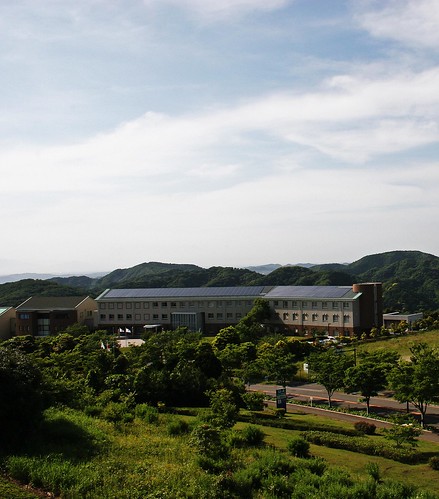
Hello friends and neighbors. Sorry if it has been awhile since my last post but things have been pretty busy here in Japan. We have been staying at the campus of the Graduate School for Advanced Studies, otherwise known as Sokendai. It is a pretty cool campus, and has one of the largest solar panel arrays I have ever seen in my life. Check out the picture below. That roof is literally covered in panels and it isn't the only building like that.

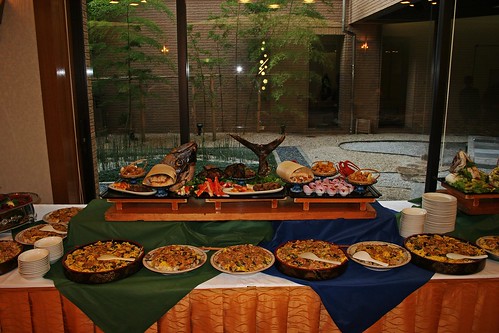
We have been treated very well here, especially in terms of the food. I guess that I told most of you that I was going to abandon the veggie ways once I got here, and that has opened up a world of possibilities. Why would I do that? Well, I personally feel as though it would be like walking through the MoMMA in NYC and only looking at the sculptures. There are simply too many new food experiences here and I can't deny them.

In addition to the great food, Sokendai is blessed with one of the most impressive views..... on the planet? Well, I won't go there, but it's pretty amazing none the less.

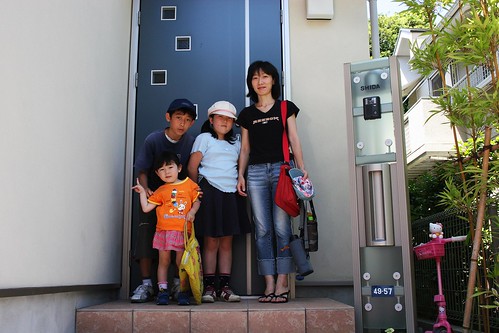
The Japan Society for the Promotion of Science (JSPS), the group funding this whole thing, put together a home stay with a Japanese family for this past weekend. That was a truly memorable experience. My family lived in Yokohama, which is just outside of Tokyo. Most of my interactions were with the wife, Mariko. There are several reasons for this. The first is that she was the only one who spoke English well enough to carry on conversation. The next is that the husband, Kiyoshi, was at work most of the time. And when I say most of the time, I mean all of the time. This man left for work at 8:00 or so week days and didn't get home until midnight. He does this six days a week. Apparently this is the norm for many families here. Seeing this type of family structure, it is not hard to see why the typical gender roles are so entrained in the culture. Mariko does all of the cooking, all of the cleaning, all of the tending to the children. And I honestly can say, I don't blame Kiyoshi at all for relenquishing those duties to her, in fact I think that is the only way that one could possibly raise a family under such conditions. This is not to say that he is inattentive. He was very kind to me, and also very loving to his children, it was actually quite touching to see them interact.
As for the children, they are not unlike children in America. They watch TV, the youngest fights over the controls for the video game, they play dodge ball in the park and get grumpy when tired. There were three in my family, Ayana (2) Atsushi (11) and Misaki (9). The two oldest studied English in school, but were too shy or stubborn to speak with me. Sadly, I am dependent upon the investment other people have made in my native tongue to speak with them here.

Today, I had one of my first experiences "out in the real Japan", and what trip to an Asian country wouldn't be complete without a visit to a giant statue of a Buddah, or Daibutsu as he is known here. The statue we saw today was really impressive, to say the least. The crowds were huge, as I am sure that you can imagine, but most of the people were tourists, doing exactly what I was doing. It was really impressive to be in the presence of a statue that is about 800 years old, and has survived a massive tsunami that washed away many of the surrounding buildings, as well as many earthquakes. This is of course to say nothing of the humble and benevolent power the statue represents. I confess it was a little weird to be "inside" this statue, given all that I indicated above. That is right, for a mere 20 yen you can go inside the Buddah. I don't know why this is significant either, I asked and all I got was the answer I expected, for good luck.

It is said that the light of the world emits from the head of Daibutsu, and indeed this statue was adorned with a massive ingot of silver to represent this. I made some attempt to capture this...

Feeling thankful for the opportunity to stand in the presence of such an austere statue, I made sure to give a reverent bow before departing. It is truly a powerful place, in spite of all the crowds.
We have been treated very well here, especially in terms of the food. I guess that I told most of you that I was going to abandon the veggie ways once I got here, and that has opened up a world of possibilities. Why would I do that? Well, I personally feel as though it would be like walking through the MoMMA in NYC and only looking at the sculptures. There are simply too many new food experiences here and I can't deny them.
In addition to the great food, Sokendai is blessed with one of the most impressive views..... on the planet? Well, I won't go there, but it's pretty amazing none the less.

The Japan Society for the Promotion of Science (JSPS), the group funding this whole thing, put together a home stay with a Japanese family for this past weekend. That was a truly memorable experience. My family lived in Yokohama, which is just outside of Tokyo. Most of my interactions were with the wife, Mariko. There are several reasons for this. The first is that she was the only one who spoke English well enough to carry on conversation. The next is that the husband, Kiyoshi, was at work most of the time. And when I say most of the time, I mean all of the time. This man left for work at 8:00 or so week days and didn't get home until midnight. He does this six days a week. Apparently this is the norm for many families here. Seeing this type of family structure, it is not hard to see why the typical gender roles are so entrained in the culture. Mariko does all of the cooking, all of the cleaning, all of the tending to the children. And I honestly can say, I don't blame Kiyoshi at all for relenquishing those duties to her, in fact I think that is the only way that one could possibly raise a family under such conditions. This is not to say that he is inattentive. He was very kind to me, and also very loving to his children, it was actually quite touching to see them interact.
As for the children, they are not unlike children in America. They watch TV, the youngest fights over the controls for the video game, they play dodge ball in the park and get grumpy when tired. There were three in my family, Ayana (2) Atsushi (11) and Misaki (9). The two oldest studied English in school, but were too shy or stubborn to speak with me. Sadly, I am dependent upon the investment other people have made in my native tongue to speak with them here.
Today, I had one of my first experiences "out in the real Japan", and what trip to an Asian country wouldn't be complete without a visit to a giant statue of a Buddah, or Daibutsu as he is known here. The statue we saw today was really impressive, to say the least. The crowds were huge, as I am sure that you can imagine, but most of the people were tourists, doing exactly what I was doing. It was really impressive to be in the presence of a statue that is about 800 years old, and has survived a massive tsunami that washed away many of the surrounding buildings, as well as many earthquakes. This is of course to say nothing of the humble and benevolent power the statue represents. I confess it was a little weird to be "inside" this statue, given all that I indicated above. That is right, for a mere 20 yen you can go inside the Buddah. I don't know why this is significant either, I asked and all I got was the answer I expected, for good luck.
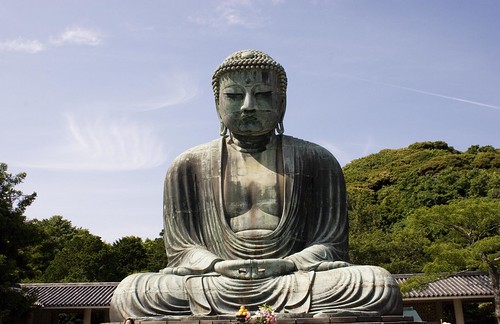
It is said that the light of the world emits from the head of Daibutsu, and indeed this statue was adorned with a massive ingot of silver to represent this. I made some attempt to capture this...

Feeling thankful for the opportunity to stand in the presence of such an austere statue, I made sure to give a reverent bow before departing. It is truly a powerful place, in spite of all the crowds.
Subscribe to:
Posts (Atom)
